Build a technical powerhouse with our guide to resilient software teams. Explore expert tips on remote development team management and scaling your distributed engineering teams effectively.


.svg)
.svg)
Building a development team used to mean finding a local office and filling it with engineers who lived within a thirty mile radius. Today, the landscape is entirely different. For an IT leader, the challenge is no longer just about hiring talent. It is about building distributed engineering teams that can withstand market shifts, time zone gaps, and the inevitable communication silos that come with remote work. Resilience is the keyword here. A resilient team does not just survive a crisis. It is designed to maintain high performance regardless of where the individual developers are sitting. Whether you are managing a small group or scaling across continents, your approach to global engineering leadership will determine if your projects launch on time or get buried in technical debt and burnout.
In a traditional office, culture often happens by accident. You grab coffee, chat at someone’s desk, and resolve minor misunderstandings in seconds. With distributed engineering teams, nothing happens by accident. Every interaction must be intentional. If your communication is weak, the team becomes fragile. If your documentation is poor, a single developer going on holiday can stall an entire sprint. A resilient team is decentralised. It does not rely on a single person to hold all the knowledge. It uses robust systems to ensure that work continues even when the lead architect is offline. This level of stability is what separates high performing remote organisations from those that struggle with constant delays. To achieve this, you need to treat your team structure like you treat your software architecture. You need redundancy, clear interfaces, and a way to handle failures without crashing the whole system.
To lead effectively on a global scale, you have to move away from micromanagement. You cannot watch over every shoulder when those shoulders are in different time zones. Instead, global engineering leadership requires a focus on outcomes rather than hours worked. This shift in mindset is often the hardest part for leaders transitioning from a physical office to a remote first environment.
Resilient software teams thrive when every member knows exactly what they are responsible for. When working across borders, ambiguity is your biggest enemy. If a developer in Argentina is waiting for a decision from a manager in New York, you have a bottleneck. You build resilience by empowering developers to make decisions within their domain. This reduces the ping pong effect of messaging back and forth across time zones.
Ownership also means that the team feels a sense of pride in the final product. When people are thousands of miles away, it is easy for them to feel like a small gear in a massive machine. By giving them ownership over specific features or modules, you increase engagement and accountability. This is a core pillar of effective remote development team management.
You cannot have three different ways of deploying code if you want to scale. Resilience comes from predictability. Every member of your distributed engineering teams should follow the same branching strategy, the same testing protocols, and the same documentation standards. This makes it easy for a developer in one region to pick up a ticket started by someone in another region without a steep learning curve.
Standardisation also extends to your communication tools. If half the team uses one app and the other half uses another, information will get lost. Choose a primary source of truth for your documentation and stick to it. Whether it is a wiki, a shared drive, or a specialised tool, everyone must know where to find the latest requirements.
Managing people you rarely see in person requires a different toolkit. Remote development team management is less about tracking Jira tickets and more about building trust and maintaining alignment. It is about understanding that your role is to clear roadblocks so your developers can do what they do best: write great code.
One of the most common mistakes IT leaders make is trying to force a 9 to 5 schedule on a global team. This leads to video call fatigue and resentment. A more resilient approach is to lean into asynchronous work. Use tools like Slack or Notion for status updates so that meetings are reserved for complex problem solving and team bonding.
However, do not abandon synchronicity entirely. Resilient software teams still need a heartbeat. This could be a weekly sync or a bi-weekly demo. The goal is to ensure everyone feels like they are part of a single mission, not just isolated contractors working on random tasks. The key is to make the synchronous time high value. If a meeting could have been an email, your team will notice and their morale will drop.
In engineering, we talk about redundancy in servers to prevent downtime. The same logic applies to your people. If only one person knows how to manage your deployment pipeline, your team is not resilient. Cross training is essential for remote development team management. Encourage pair programming and regular knowledge sharing sessions. This ensures that the bus factor is high, meaning if one person is unavailable, the team’s momentum remains untouched.
Building redundancy does not mean hiring double the people you need. it means ensuring that knowledge is distributed. Use recorded video walkthroughs for complex parts of the codebase. Create a culture where writing documentation is just as important as writing the code itself. When information is accessible to everyone, the team can keep moving regardless of individual schedules.
Culture is the glue that holds distributed engineering teams together when things get difficult. When a production server goes down at midnight, a team with a strong culture works together to fix it. A team without it starts pointing fingers. In a remote environment, culture is not built through office perks or ping pong tables. It is built through shared values and mutual respect.
If you want to build resilient software teams, you must remove the fear of failure. When a mistake happens, focus on the system, not the person. Ask how the process allowed the error to occur and how to fix the process. This encourages honesty and rapid learning, which are the hallmarks of a resilient organisation. When engineers are not afraid to admit to a mistake, problems get solved much faster.
In a hybrid or distributed setup, there is often a proximity bias where people closer to the leadership get more opportunities or information. Effective global engineering leadership requires active effort to ensure everyone has equal access to information. If a decision is made in a small huddle, it must be documented and shared with the entire team immediately. This prevents remote members from feeling like second class citizens and keeps everyone aligned on the same goals.
As your needs grow, you might find that hiring locally is no longer viable or cost effective. This is where the strategic use of nearshore or offshore hubs becomes a competitive advantage. By spreading your talent across a few key regions, you can achieve follow the sun development, where code is being written or tested 24 hours a day.
This approach requires a sophisticated level of remote development team management. You need to consider cultural nuances, local holidays, and varying communication styles. But the payoff is a team that is more flexible and capable of handling larger workloads without burning out any single group. Scaling globally also gives you access to a much wider talent pool, ensuring you have the best experts for every specific technology in your stack.
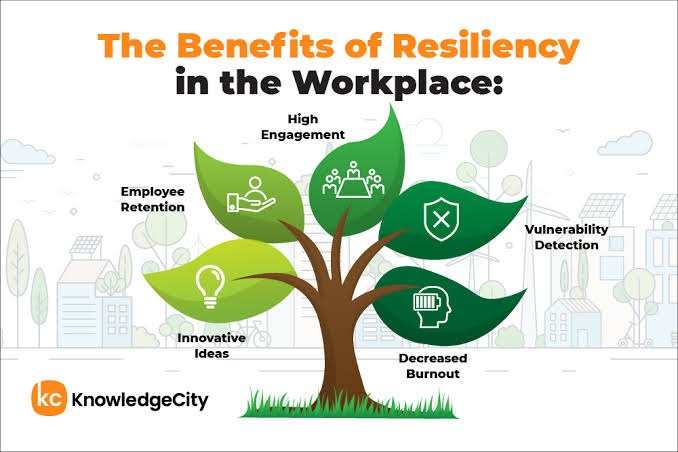
A resilient team is also a sustainable one. You cannot expect developers to work at 100 percent capacity forever without burning out. Part of global engineering leadership is monitoring the health and well being of your staff. This is harder to do through a screen, but it is vital. Look for signs of withdrawal or decreased quality in work. These are often early indicators that someone needs a break or more support.
Encourage your team to take their holiday time and to disconnect after hours. In a world where work is always just a laptop lid away, setting these boundaries is essential for the longevity of your distributed engineering teams. A team that rests well performs better. By treating your engineers as humans rather than resources, you build a loyal and dedicated workforce that will stick with you through the tough times.
Building these systems from scratch is a massive undertaking, but you do not have to do it alone. Blue Coding specialises in helping IT leaders bridge the gap between needing talent and building high performing, resilient organisations. We integrate developers as a seamless extension of your core team. By handling the complexities of international hiring and logistics, we free you to focus on your strategic roadmap. If you are ready to turn your engineering department into a global powerhouse, let’s talk. We invite you to book a zero-cost discovery session to map out your path to a stronger technical workforce. Contact us to book the call now!


Subscribe to our blog and get the latest articles, insights, and industry updates delivered straight to your inbox