Make informed decisions when selecting a nearshore partner with these expert evaluation criteria.

.svg)
.svg)
Nearshore outsourcing is becoming very popular, with more than 80% of U.S. tech companies and over 75% of E.U. tech companies looking into it. Selecting the right nearshore development team can define the success of your software initiatives. In an increasingly competitive digital landscape, companies need partners who bring technical excellence, operational reliability, and strategic insight, not just coding talent. Evaluating nearshore teams requires a careful balance of assessing technical skills, cultural fit, workflow transparency, and long-term stability. This guide explores the key characteristics and criteria that distinguish high-performing nearshore partners, helping businesses make informed nearshore software development team evaluations.
A reliable nearshore partner shows strong technical maturity without needing to “prove” it every five minutes. Their engineers understand modern frameworks, navigate complex architectures with confidence, and make practical recommendations instead of overwhelming you with theory. You will notice it in how they approach problem-solving, how quickly they grasp your product’s ecosystem, and how naturally they balance innovation with long-term stability. True nearshore expertise always shows up in the clarity of their solutions, not in long technical speeches.
Smooth collaboration is the real currency of nearshore development and a key point to look out for during nearshore software development team evaluation. The best teams communicate in a way that reduces friction instead of adding to it. They give you clean progress signals, anticipate blockers before they escalate, and keep every conversation purposeful instead of performative. You want a team that understands nuance, aligns with your business context, and instinctively knows how to maintain momentum even when tackling complicated requirements.
Nearshore success depends heavily on mindset. The strongest teams behave like product co-owners, not outsourced executors. They ask the right questions, challenge assumptions respectfully, and take responsibility for outcomes, not just assignments. This mindset shows up in their ability to think ahead, protect your timelines, and treat your product with the same urgency they would give their own. When a team genuinely cares about your success, it becomes obvious in every decision they make.
Process discipline is a major differentiator. High-performing nearshore teams operate with structured workflows, documented procedures, consistent sprint rituals, and a predictable delivery cadence. They do not “figure things out as they go.” They bring a refined operational engine that enhances your own. This level of maturity minimizes rework, reduces surprises, and gives you the comfort of knowing that every release is backed by real quality assurance.
One trait clients overlook, when they are to evaluate nearshore developers, is internal team stability. Great nearshore companies invest in people, create an environment engineers want to stay in, and maintain a recruitment pipeline filled with vetted, career-driven talent. Low turnover protects your product’s continuity. High retention ensures that the knowledge built over time does not evaporate suddenly. When a partner values their engineers, it translates into better consistency, stronger collaboration, and more resilient delivery.
Technical skill is mandatory, but contextual intelligence is what turns a vendor into a long-term partner. The best nearshore developers understand why you are building something, your industry, your end users, your constraints, and your long-term goals. They do not approach your roadmap mechanically, they approach it strategically. This fluency helps them offer smarter suggestions, remove ambiguity, and translate business value into technical execution with minimal confusion.
A trustworthy nearshore team takes data protection seriously from day one. They follow clear security standards, respect your compliance requirements, and maintain governance practices that give your product a safe operational environment. This includes secure infrastructure, controlled access, documented protocols, and a culture that treats confidentiality as non-negotiable. A strong security posture signals that they are ready to grow with you, not put your product at risk.
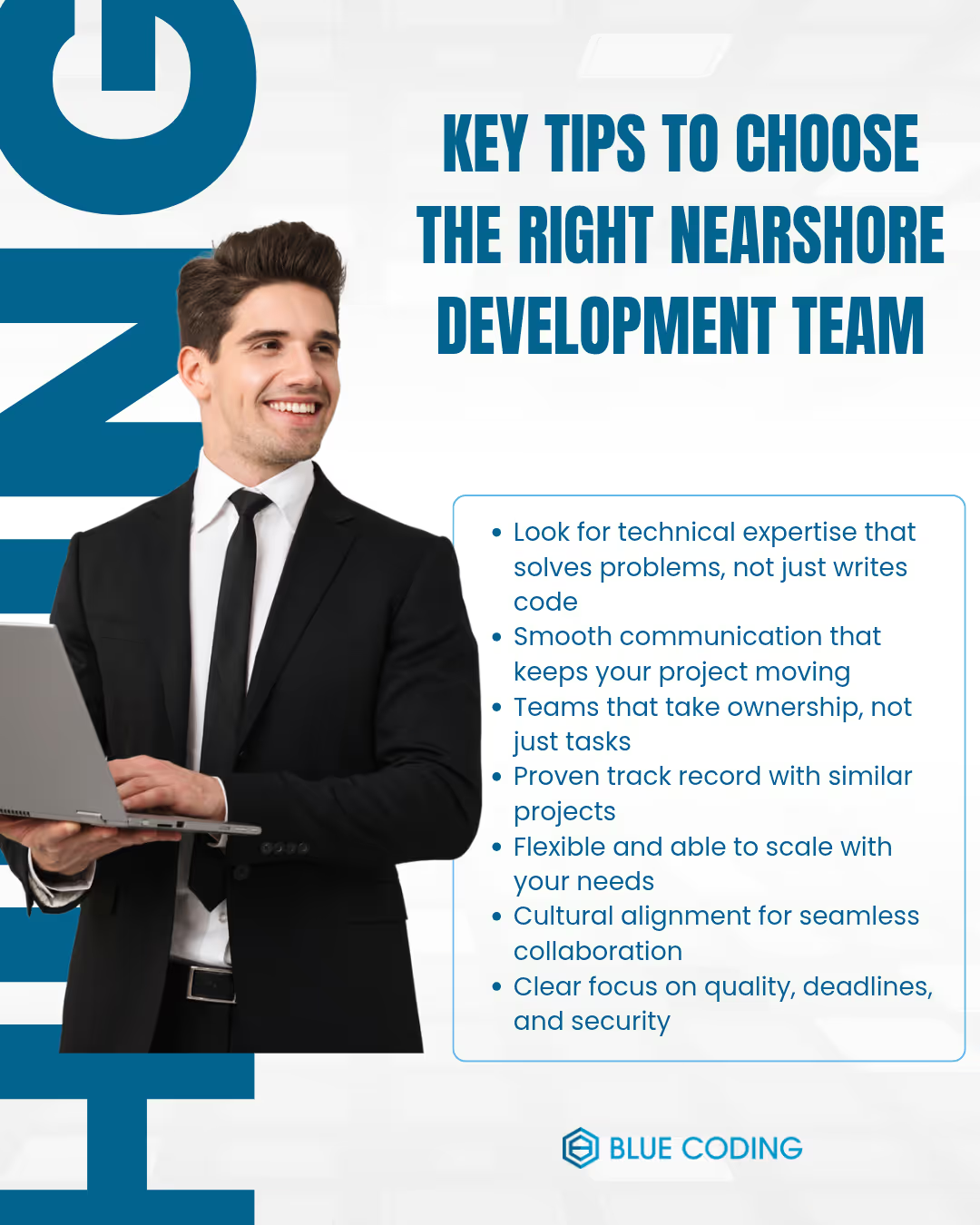
When evaluating a nearshore team, past performance speaks louder than promises. Look for evidence of successfully delivered projects in your industry or with similar technical complexity. Case studies, client testimonials, and portfolios reveal not only their capabilities but also how they manage timelines, respond to challenges, and maintain quality. A team that has repeatedly delivered similar solutions is more likely to anticipate roadblocks and provide solutions that fit your specific context.
Visibility into the development process is essential for trust and alignment. The right team provides clear documentation, regular progress updates, and accessible project dashboards. They explain methodologies, milestones, and expected outcomes in plain language so stakeholders can follow without constant clarification. Transparency is a key indicator that a team values accountability and reduces the risk of surprises during critical stages of the project.
Projects evolve, and your nearshore partner must adapt to changing priorities. Evaluate whether the team can scale up or down efficiently, integrate new technologies, and adjust workflows without disrupting delivery. Flexibility also includes their ability to handle evolving requirements, shifting deadlines, or unexpected technical challenges. Teams that demonstrate resilience under changing conditions will maintain project continuity and avoid costly delays.
Technical skills are necessary, but cultural alignment and collaboration style often determine success. A strong nearshore team integrates seamlessly with your internal team, shares communication norms, and embraces collaborative tools. Cultural compatibility reduces misunderstandings, accelerates decision-making, and ensures both teams work toward the same business goals. Look for a team that values partnership over mere execution.
Evaluation should include how seriously a team treats quality and delivery commitments. They should have structured quality assurance processes, thorough testing protocols, and a proactive approach to identifying issues before they impact the end product. Teams that take ownership of both deadlines and deliverables instill confidence that your project will meet expectations without constant oversight.
A competent nearshore partner offers strategic insights. They help refine requirements, suggest technology improvements, and provide solutions that optimize cost, performance, and scalability. Their input should enhance your roadmap, uncover hidden risks, and translate business objectives into technically feasible solutions. A team that contributes thoughtfully to strategy is a partner, not just a vendor.
Evaluating how the team handles sensitive information and regulatory requirements is critical. They should have clear security policies, data protection measures, and compliance practices aligned with your industry standards. Security awareness should be built into every phase of development, ensuring your intellectual property and customer data remain protected throughout the project lifecycle.
Many companies are shifting to nearshore outsourcing because it combines the benefits of proximity with unmatched efficiency. Unlike traditional in-office teams, nearshore developers provide access to highly skilled talent without the constraints of local hiring shortages or inflated costs. Time zone alignment ensures real-time collaboration, while cultural and linguistic similarities reduce miscommunication and accelerate project delivery. Companies also gain flexibility to scale teams up or down based on project demands, without the overhead of long-term employment. Ultimately, nearshore outsourcing offers a strategic balance of expertise, speed, and cost-effectiveness that in-house teams alone often cannot match.
At Blue Coding, we believe that software development is more than writing code, it is about building partnerships that drive real business impact. Our teams combine deep technical expertise with strategic insight, delivering solutions that are reliable, scalable, and tailored to your unique goals. We take ownership of every project and ensure seamless collaboration, clear communication, and uncompromising quality. If you are ready to elevate your software initiatives with a nearshore partner who treats your success as their own, contact us today to explore how we can work together by discussing strategies on a free discovery call!


Subscribe to our blog and get the latest articles, insights, and industry updates delivered straight to your inbox