The senior developer pool in North America is shrinking. Here is how nearshore partnerships are filling the gap without the six-figure salary fight.


.svg)
.svg)
The senior developer shortage in North America is not a new problem. But in 2026 it has become an unavoidable one.
Companies that were managing the gap through aggressive compensation, remote-first hiring, and stretching mid-level engineers into senior roles are running out of runway. The pool of available senior talent in the US and Canada has not grown fast enough to meet demand, and the bidding war for the engineers who are available has pushed salaries into territory that mid-market companies simply cannot sustain.
The companies that are scaling their engineering teams without breaking their budgets are not doing it by winning that bidding war. They are doing it by looking somewhere else entirely.
According to the US Bureau of Labor Statistics, software developer employment in the US is projected to grow 25 percent through 2032, nearly four times faster than the average for all occupations. The talent pipeline is not growing anywhere close to that rate domestically. The gap is structural, and it is not closing on its own.
Nearshore partnerships, specifically with senior developer nearshore hubs across Latin America, are how a growing number of North American companies are solving this problem right now. This post breaks down why that solution works, what makes it different from the alternatives, and how to think about building a nearshore strategy that actually delivers.
For years, the default response to the US tech talent shortage was to pay more. Raise the base. Add equity. Offer signing bonuses. That approach worked when the pool of available senior talent was large enough that higher compensation could pull candidates away from competitors.
That pool has shrunk. The engineers with ten-plus years of experience in modern stacks, the ones who can own architecture decisions, mentor junior developers, and ship without heavy oversight, are employed, well-compensated, and not actively looking. Recruiting them requires either extraordinary packages or waiting months for a window that may never open.
Meanwhile, the teams depending on senior engineering capacity to deliver do not have months to wait. They have sprint cycles and roadmaps and product commitments that need to be met now. The senior developer shortage is a structural problem that requires a structural solution, not a bigger recruiting budget.
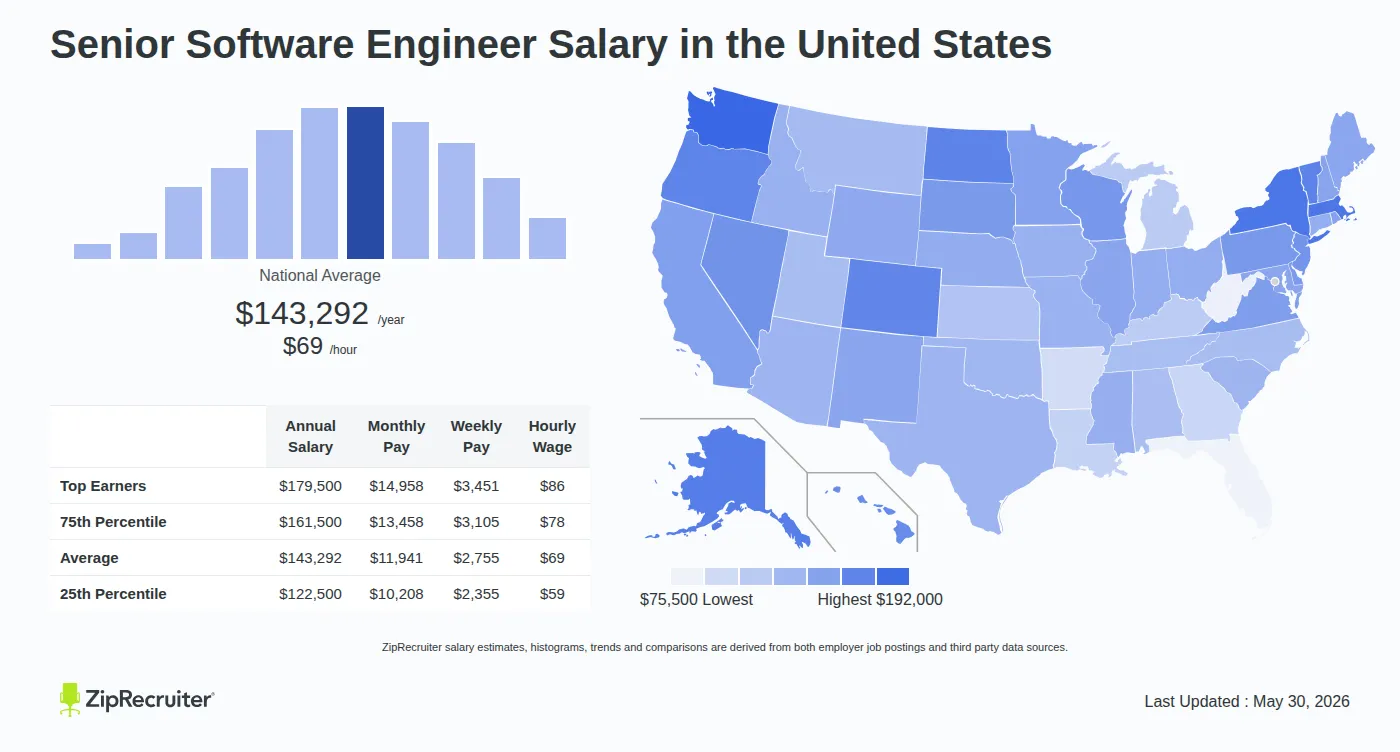
One of the less visible consequences of the senior developer shortage is what it does to the engineers who are already on the team. When there are not enough seniors, mid-level developers get stretched into roles they are not yet ready for. They own decisions they lack the experience to make confidently. They carry architectural responsibility without the depth to know what they do not know.
This is not a criticism of those engineers. It is a system problem. Stretching mid-level developers before they are ready slows their growth, increases the rate of technical debt accumulation, and creates fragility in systems that eventually have to be rebuilt from scratch. It is a short-term fix with long-term costs that rarely show up in any single quarter but compound quietly over time.
Bridging the engineering skills gap requires adding actual senior capacity, not redistributing existing capacity thinner.
The narrative around Latin American engineering talent has shifted significantly over the past five years. It used to be positioned primarily as a cost play. That framing undersells what is actually available.
Countries like Argentina, Brazil, Colombia, Mexico, and Chile have produced generations of senior engineers who have worked directly with US-based product teams, built and maintained complex distributed systems, and developed the kind of hard-won technical judgment that only comes from years of real-world engineering work. These are not junior developers with a few years of experience. These are the engineers that North American companies are failing to find domestically.
The senior developer nearshore hubs that have developed across Latin America represent a genuine deep talent pool, not a stopgap. For companies serious about bridging the engineering skills gap, this is where the solution actually lives.
One of the reasons senior nearshore developers from Latin America are more effective than equivalent talent from traditional offshore markets is simple geography. Latin America sits within zero to three hours of US time zones. A senior engineer in Bogota, Buenos Aires, or Mexico City can own a morning architecture review, be available for a real-time production incident, and stay engaged through the afternoon without either party working outside normal hours.
That time zone alignment is what makes it possible for a nearshore senior developer to function as a genuine team member rather than a contractor who reviews work asynchronously and hopes the context transfer was complete enough. It is also what separates nearshore partnerships from offshore arrangements where the senior engineers are technically excellent but structurally disconnected from the teams depending on them.
You can read more about why this distinction matters in practice in Blue Coding's breakdown of what makes staff augmentation outperform traditional outsourcing at different company growth stages.
Senior engineers communicate constantly. They write architecture decision records, lead technical design discussions, push back on requirements that are technically infeasible, and mentor junior engineers in ways that require precise and nuanced communication. A senior developer who struggles with English is not just a communication inconvenience. They are functionally limited in the scope of the senior role itself.
The best senior developer nearshore hubs in Latin America have addressed this directly. The engineers who have built careers working with US product teams are, in most cases, professionally fluent in English. Not conversationally adequate. Professionally fluent in the way that allows them to be full participants in every part of the engineering process, from technical planning to cross-functional collaboration.
Not every engineering role on your team carries the same seniority premium. Some functions benefit enormously from experienced judgment. Others are well-suited to strong mid-level engineers with good systems around them. When you are building a nearshore senior engineering strategy, starting with a clear map of where senior capacity creates the most leverage is how you avoid overspending or misfitting talent to roles.
Typically, the highest-leverage applications for senior nearshore engineers are architecture ownership, technical leadership of product features, complex integration work, and mentoring. These are the functions where the gap between a senior and a mid-level engineer shows up most clearly in output quality and delivery confidence.
The distinction between embedding senior nearshore engineers and outsourcing to a vendor team is one of the most important structural choices you will make. Outsourced teams carry institutional knowledge that stays with the vendor. Embedded engineers carry knowledge that stays with your organization.
Senior engineers who are embedded in your team, working in your tools, attending your planning sessions, and building relationships with your internal engineers develop the product context that makes their technical judgment genuinely useful. Without that context, even the most technically excellent senior engineer is working with one hand tied behind their back.
This is the core argument for nearshore staff augmentation over traditional outsourcing when senior capacity is what you actually need. For a detailed look at how companies have scaled this from small teams to full engineering organizations, this post on scaling from 5 to 50 engineers is worth reading before you decide on an approach.
Years of experience and genuine seniority are not the same thing. A developer with eight years of experience who has spent most of that time maintaining legacy systems in a single language is not the same as a developer with six years of experience who has owned architecture decisions, mentored engineers, and shipped production systems under real-world constraints.
When you are hiring senior nearshore engineers, the vetting process needs to surface actual seniority, not just tenure. According to Stack Overflow's 2024 Developer Survey, the skills that distinguish senior developers from mid-level ones are overwhelmingly about system design, technical communication, and decision-making under ambiguity, not raw coding ability. Your vetting process should reflect that.
A strong nearshore partner handles this filtering for you and stands behind the placements they make. If a senior engineer they place does not perform at the level represented, they have a replacement process that protects you from absorbing that cost alone.
Bringing a senior nearshore engineer into your team is not just an onboarding exercise. It is an integration process that requires deliberate investment from both sides. Senior engineers need context to operate effectively. They need to understand not just the codebase but the product decisions behind it, the technical debt that is known and accepted, the roadmap priorities that drive architectural choices.
The companies that get the most from senior nearshore partnerships are the ones that treat the first 30 to 60 days as an investment in integration rather than an expectation of immediate full output. A senior engineer who is properly integrated delivers compounding value over months and years. One who never fully understands the system they are working in delivers inconsistently regardless of how talented they are.
Blue Coding connects US and Canadian companies with senior, English-proficient engineers across Latin America who are vetted for genuine seniority, not just years on a resume. We specialize in the kind of technical screening that surfaces actual engineering judgment, and we stand behind every placement we make. If the US tech talent shortage is affecting your ability to ship, we have seen this problem from every angle. And we have helped companies across every stage of growth solve it without overhauling their budget or their hiring process entirely.
For more on why the cheapest engineering option almost never stays cheap, Blue Coding's post on the hidden cost of cutting corners on engineering talent is a useful read before your next vendor conversation. We offer a free first call with no commitment. Just a direct conversation about what you are trying to build and whether we are the right partner to help you build it. Book your free discovery call now with Blue Coding!


Subscribe to our blog and get the latest articles, insights, and industry updates delivered straight to your inbox