Is your team reaching peak efficiency? Learn how generative AI engineering productivity is breaking the linear growth model and helping companies launch products in half the time.
_11zon%2520(1).webp)

.svg)
.svg)
The software development sector has reached an intriguing tipping point. By the end of 2026, it is projected that AI-augmented software development will be responsible for a 45% reduction in the total time spent on manual coding across global enterprise projects. This is not about a single rockstar developer working ten times faster than their peers. Instead, it is about entire teams doubling their output and slashing delivery timelines through the strategic use of machine intelligence. In this new era, the 2x Developer is the standard, and nearshore teams are leading the charge. For companies looking to scale, the focus has shifted from simply finding more engineers to finding engineers who know how to wield AI as a force multiplier. Nearshore teams, specifically those in Latin America, have moved beyond basic staff augmentation. They are now integrating high-level automation into every stage of the development lifecycle. This ensures that the distance between a product roadmap and a live launch is shorter than ever before.
Many people think using AI in coding is just about asking a chatbot to write a function. In reality, it is a comprehensive workflow change. It involves using specialized tools to handle the grunt work like boilerplate code, unit testing, and documentation. When nearshore teams adopt these tools, they eliminate the traditional bottlenecks of distributed work.
Because nearshore teams operate in your time zone, the real-time collaboration combined with AI-driven speed means that a task that used to take a week can now be completed in a few days. The AI handles the syntax and the repetitive structures, while the senior nearshore engineer focuses on the high-level architecture and security. This creates a tight feedback loop. You can review the AI-generated progress from the previous day and set the direction for the next few hours, preventing the common issue of teams spending a full night working on the wrong interpretation of a requirement.
The integration of these tools also allows for better consistency. Humans have different styles and habits, but AI can be trained to follow a specific organizational standard. This means that when a nearshore team delivers code, it looks and functions exactly like the code written by your in-house team. This level of harmony is essential for long-term project health and ease of maintenance.
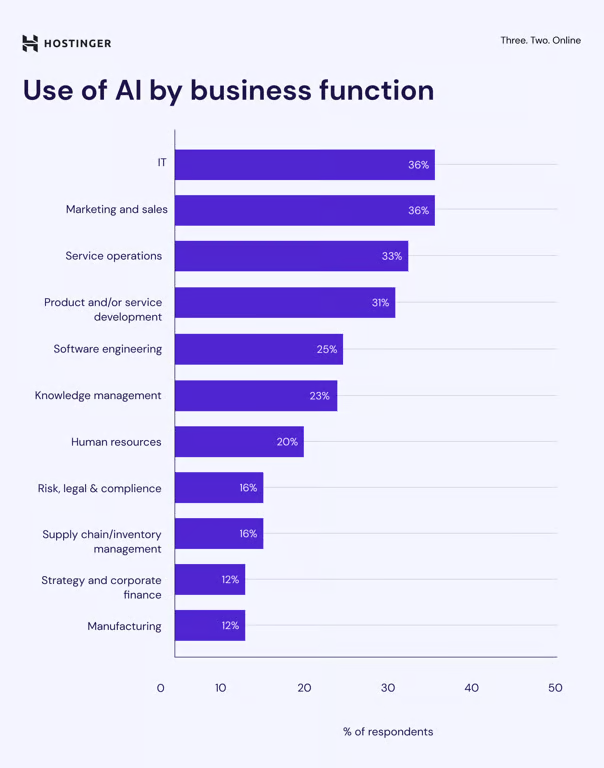
Efficiency is great, but businesses run on numbers. Companies are no longer questioning if they should use AI assistants; they are measuring how much they save. Recent reports show that teams using these assistants see a 35% increase in task completion speed for complex features and up to a 70% increase for routine maintenance.
The return on investment is not just about typing faster. It is about reducing developer burnout. When a nearshore team uses AI to handle the tedious parts of the codebase, they stay focused on the creative problem-solving that actually moves the needle for your business. This leads to higher code quality and fewer bugs, which saves even more money during the quality assurance phase.
Furthermore, GitHub Copilot ROI is reflected in the speed of onboarding. New developers on a nearshore team can use AI to quickly understand an existing codebase. The AI explains the logic behind complex functions and suggests where new code should be placed. This reduces the ramp-up time from weeks to days, allowing your project to maintain momentum even as the team grows.
Traditionally, if you wanted to double your output, you had to double your headcount. That linear growth model is officially broken. Generative AI engineering productivity allows a lean team of five engineers to produce the same volume of high-quality code as a team of ten did just a few years ago.
Nearshore teams are using generative models to auto-generate complex API integrations based on minimal documentation. They also use them to refactor legacy code into modern frameworks in hours rather than months and predict potential security vulnerabilities before the code is even committed. Instead of paying for a massive team that requires heavy management, you pay for a highly efficient, AI-powered team that requires less overhead.
One of the biggest drains on a budget is paying senior developers to write standard code that has been written a thousand times before. By utilizing generative AI engineering productivity tools, teams can spin up the entire skeleton of a new application in minutes. This allows the team to spend the first day of a project working on the unique business logic that makes your product different, rather than spending a week setting up environments and basic database schemas.
The 2x in the 2x developer does not just stand for double the speed. It also stands for double the scrutiny. Modern development includes automated testing suites that are far more rigorous than human-only testing. Nearshore teams are now deploying AI agents that break the code intentionally to find edge cases that a human might miss.
This proactive approach means that by the time you see a demo, the code is already battle-tested. This reduces the back-and-forth during the User Acceptance Testing phase, which is traditionally where many software projects fall behind schedule. AI also helps in regression testing. Every time a new feature is added, the AI automatically checks every other part of the system to ensure nothing else broke.
The demand for high-level developers still outstrips the supply. However, the 2x developer model allows companies to bridge this gap. You do not need to find twenty engineers; you need to find ten who are experts in AI-augmented software development. Nearshore hubs have become the training ground for these modern engineers. They are early adopters of every tool that can give them a competitive edge.
These developers are also better at documentation. Since AI can generate draft documentation as the code is being written, the nearshore team can provide a fully documented system with every release. This solves the age-old problem of losing institutional knowledge when a developer leaves a project.
While we talk a lot about tools, the human element remains the most critical factor. The 2x developer is someone who knows when to trust the AI and when to override it. This level of judgment only comes with experience. Nearshore teams provide senior-level talent that has the maturity to manage these tools effectively.
They ensure that the code is not just fast, but ethical and secure. AI can sometimes suggest shortcuts that might compromise data privacy. A skilled nearshore developer will catch these issues immediately. This balance of machine speed and human oversight is what truly defines the modern engineering landscape.
Ultimately, the goal is to create better software for your users. Whether that means a smoother user interface, faster load times, or more reliable features, the 2x developer model delivers those results in half the time. Choosing a team that ignores these tools is a risk. In a world where your competitors are doubling their speed, staying with traditional, manual-only development is a recipe for falling behind.
As we look toward the future of tech growth, we are moving toward a reality where the developer acts more like an architect or a conductor, guiding the AI to build the vision. Nearshore teams are already comfortable in this role, making them the ideal partners for your next decade of growth.
Our team at Blue Coding companies with the top 1% of nearshore tech talent that understands these modern workflows. Our teams are experts in navigating the shift toward high-efficiency, automated development environments. If you are looking to scale your engineering team or want to understand how to better integrate these technologies into your current roadmap, we are here to help. We provide a first free call for any queries or strategy discussions to help you determine the best path forward for your technical needs. Contact us now to book your call!


Subscribe to our blog and get the latest articles, insights, and industry updates delivered straight to your inbox