The hunt for general devs is over. Discover the most in-demand developer skills Latin America offers, from practical AI integration to specialized DevOps.


.svg)
.svg)
The skills US companies are looking for in nearshore engineers have shifted meaningfully over the past two years. The conversation used to center on general full-stack capability at a lower cost than domestic hiring. It has moved toward specific, often highly specialized skill sets that are difficult to find anywhere, not just difficult to find affordably.
This shift matters because it changes what companies should actually be looking for when they evaluate nearshore partners. The question is no longer just can you find me a developer. Can you find me a developer with this specific, in-demand capability, and how deep is the talent pool in that specific area? This post covers the developer skills currently most in demand among US companies sourcing from Latin America, why each one has become a priority, and what to look for when evaluating candidates in these specific areas.
According to Stack Overflow's 2024 Developer Survey, 76 percent of developers are now using or planning to use AI tools in their development process, and the skills gap between developers who can use these tools effectively and those who cannot has become one of the most significant differentiators in hiring decisions across the industry.
AI and machine learning engineering has moved from a specialized niche to a core capability that most product roadmaps now require in some form. This includes traditional machine learning engineering, but increasingly it covers practical AI integration work: building features on top of large language models, implementing retrieval-augmented generation systems, fine-tuning models for specific use cases, and architecting AI features that perform reliably in production.
The demand for this skill set in the US has outpaced the domestic supply significantly, which has made Latin America one of the most active sourcing regions for AI engineering talent. The region has produced a strong pipeline of engineers who combine traditional software engineering depth with practical AI implementation experience, which is a different and often more immediately useful profile than a pure machine learning researcher.
For companies evaluating AI engineering candidates, Our guide on how to hire AI developers covers the specific evaluation criteria that distinguish genuinely capable AI engineers from those with surface-level familiarity.
A specific and newer category within AI engineering demand is the forward deployed engineer, a role that combines technical AI implementation skill with direct customer-facing work to deploy and customize AI solutions for specific client needs. This hybrid skill set, part engineer and part solutions architect, is in particularly short supply and high demand among US companies building AI products that require significant customer-specific configuration.
Latin America has been a notable source for this specific specialization. Blue Coding's announcement on forward deployed AI engineers and dedicated pods covers what this role looks like in practice and why it has become such a high-demand specialization.
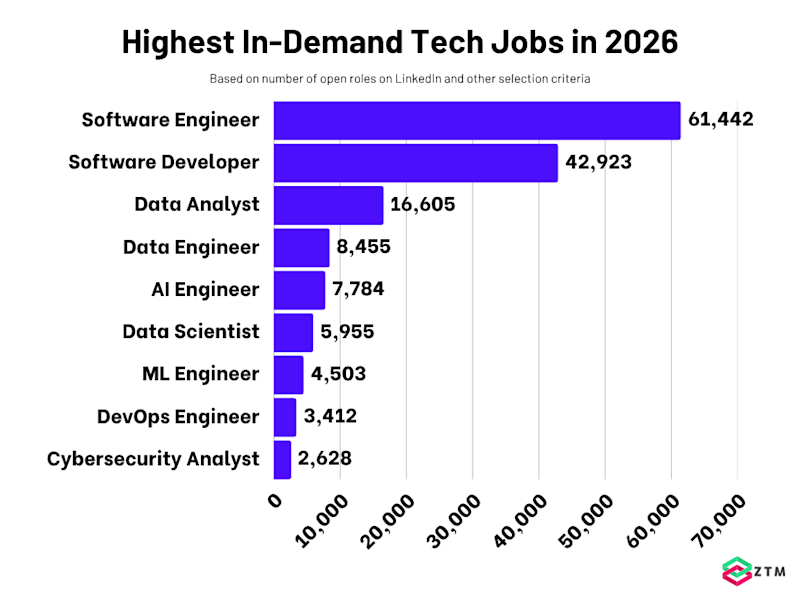
General full-stack capability remains valuable, but US companies are increasingly specific about the framework expertise they are sourcing for. React and Next.js on the front end, combined with Node.js, Python with frameworks like FastAPI or Django, and Go for performance-critical backend services, represent the most consistently requested combination among mid-size to enterprise companies sourcing nearshore talent.
The depth requested has also increased. Companies are not just looking for engineers who have used these frameworks. They want engineers who understand the architectural tradeoffs within them, who have made decisions about state management approaches, rendering strategies, and API design patterns at a level that reflects genuine senior judgment rather than tutorial-level familiarity.
For companies evaluating their own tech stack choices alongside this hiring need, this guide to choosing a tech stack for your business is a useful companion resource.
Beyond general framework expertise, demand has grown for engineers with specific domain experience in regulated or complex backend environments. Supply chain software development, with its specific requirements around inventory systems, logistics integrations, and real-time tracking, has become a recognizable specialization that companies are sourcing for directly rather than treating as generic backend work.
Similarly, blockchain development, while having cooled from its peak hype cycle, remains a specific and valuable skill set for companies building in fintech, supply chain transparency, and digital asset infrastructure. Blue Coding's guide to hiring supply chain software developers and the broader question of evaluating blockchain talent both reflect how specific these domain requirements have become.
As companies scale, the gap between engineering teams that can ship features and engineering teams that can ship features reliably at scale increasingly comes down to DevOps and infrastructure expertise. Skills in Kubernetes orchestration, infrastructure as code using tools like Terraform, CI/CD pipeline design, and cloud cost optimization across AWS, GCP, and Azure are consistently among the most requested specializations from US companies sourcing nearshore talent.
This demand reflects a broader shift in how companies think about engineering capacity. A feature that ships but causes production instability or runs up unexpected cloud costs is not actually a win. Senior DevOps and infrastructure engineers who can build systems that scale reliably and cost-effectively have become as valuable as the engineers building the features those systems support.
The in-demand skills covered in this post are not evenly distributed across Latin America. Specific cities have developed concentrated talent pools in specific specializations, driven by local university programs, established tech ecosystems, and the presence of regional offices for global tech companies that have trained a generation of engineers in modern practices. Buenos Aires, Sao Paulo, Bogota, Medellin, and Mexico City have each developed distinct strengths across the skill categories covered here, from AI and fintech engineering to DevOps and infrastructure specialization.
A general technical interview is not sufficient to evaluate genuine depth in a specialized area like AI engineering, supply chain systems, or infrastructure architecture. Companies sourcing these in-demand skills need a vetting process that includes domain-specific technical assessment conducted by someone with real expertise in that area, not a generalist running a standard coding interview. This is one of the most important things to evaluate when choosing a nearshore partner for specialized hiring. A partner with a deep bench in AI engineering or infrastructure specialization, and a vetting process designed specifically for that domain, will surface genuinely qualified candidates far more reliably than a generalist staffing process applied uniformly across every skill category.
According to the World Economic Forum's Future of Jobs report, AI and machine learning specialists, along with data analysts and cybersecurity professionals, rank among the fastest-growing job categories globally, with demand significantly outpacing the domestic US talent pipeline in each category. Companies that have built reliable sourcing pipelines into Latin America for these specific skill sets are positioned to fill roles that would otherwise sit open for months in the domestic market. The companies getting ahead of this gap are not waiting for the domestic talent pipeline to catch up. They are building nearshore sourcing relationships now, specifically for the skill categories where the gap is widest, so they have access to qualified talent when the need arises rather than starting a search from zero when the pressure is already on.
Blue Coding connects US companies with senior developers across Latin America who specialize in the skill areas in highest demand right now, including AI and machine learning engineering, modern full-stack development, DevOps and infrastructure, and domain-specific backend specializations.
Our vetting process is built around the specific technical depth each specialization requires, not a one-size-fits-all evaluation. We match you with engineers who have genuine, demonstrated expertise in the exact area your roadmap requires.
We offer a free first call with no commitment. A direct conversation about the specific skills your team needs and whether we have the right talent in our network to fill that gap. Book your free call with Blue Coding now!


Subscribe to our blog and get the latest articles, insights, and industry updates delivered straight to your inbox