AI augmented development teams move faster, ship more, and cost less than traditional teams. Here is what makes them work and how to build one.


.svg)
.svg)
If your engineering team is still working the same way it did three years ago, you are already behind. Not because the people are not good. But because the structure of how software gets built has changed, and teams that have adapted to it are moving faster and shipping more. AI augmented development teams are a real structural shift in how high-performing software teams operate. And the gap between companies that have figured this out and the ones still experimenting is growing every quarter. At Blue Coding, we have been building nearshore AI development teams for US companies since 2014. Here is what we have learned about what makes these teams different and why they consistently outperform.
An AI augmented development team is not a team where robots write all the code. It is a team where skilled engineers use AI tools as a core, everyday part of how they work, the same way they use version control or testing frameworks.
The AI handles the repetitive work: generating boilerplate, writing first drafts of components, running tests, producing documentation. The developer handles everything that requires real judgment: architecture decisions, code review, product tradeoffs, and catching what the AI gets wrong.
When this is done well, the results are hard to argue with. According to a controlled study by GitHub and MIT, GitHub Copilot users complete tasks up to 55% faster than developers without it. Developers using AI tools also report saving 30 to 60% of the time they previously spent on repetitive work like testing and documentation, according to research compiled by Index.dev. And according to the 2025 DORA Report, more than 80% of respondents believe AI makes them more productive when it is properly integrated into their workflow.
The key phrase is properly integrated. That is where most teams get it wrong.
Traditional software teams are slow not because of the people but because of how the work is structured. A standard team moves mostly in sequence. Code gets written, reviewed, sent back, revised, reviewed again. Every handoff takes time and every wait creates a bottleneck.
AI augmented teams break that cycle. When a developer can generate a working first draft in minutes, the whole workflow accelerates. Code review shifts from fixing syntax to evaluating architecture. Testing cycles compress. Individual developers can run multiple workstreams at once.
Research from Faros AI, based on data from over 10,000 developers across 1,255 teams, found that AI augmented developers complete more tasks and parallelize more workstreams compared to non-augmented counterparts. That is a structural advantage that compounds over time.
Here is the honest version: AI augmented teams have a real advantage, but only when built with the right people and the right review process.
The same Faros AI research also found that AI-generated code gets bigger and buggier when teams do not review it carefully. Code review time increased by 91% in some cases as teams generated more pull requests without expanding their review capacity. Faster output without stronger review discipline creates technical debt, not better results.
A December 2025 analysis by CodeRabbit of AI-coauthored pull requests found that AI-generated code had 1.7 times more issues than human-written code. That is not a reason to avoid AI. It is a reason to hire engineers who know how to use it responsibly.
The engineers who are most valuable in this environment are not just good coders. They prompt effectively, evaluate AI output critically, catch architectural problems early, and make the judgment calls that AI consistently gets wrong. That is a distinct skillset, and it is what separates a high-performing AI augmented team from one that just generates messy code faster.
Engineers who thrive in AI augmented environments know how to use tools like Cursor, Copilot, or Claude Code as genuine extensions of their workflow. They give AI tools the right context to produce useful output. They know when to trust a result and when to throw it out. And they stay sharp enough technically to catch what the AI consistently gets wrong.
This is not the same as listing AI tools on a resume. It is a work habit. Ask a candidate to walk you through how they actually use these tools day to day. A developer with real fluency will give you specific, opinionated answers about what they use the tools for, where they avoid them, and how they handle the output. Someone going through the motions will stay vague.
The best AI augmented teams treat human oversight as a feature, not a bottleneck. They are clear about what AI handles and what engineers decide. Architecture choices, performance tradeoffs, security considerations: these are not things AI gets right consistently. They require engineers who understand the full system and can make decisions that hold up over time. Teams that skip this layer in the name of speed pay for it in rework, bugs, and instability down the line.
A smaller, well-structured AI augmented team can deliver what a much larger traditional team delivers, faster, with less coordination overhead. Individual developers carry more of the load on each workstream, which means fewer people are needed to keep multiple projects moving at once. That translates to lower costs and timelines that do not balloon every time scope grows.
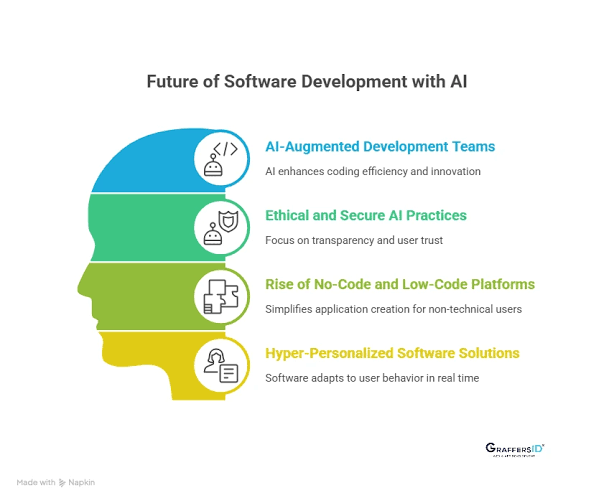
There is a reason US companies are increasingly building their AI augmented teams through nearshore partners in Latin America.
LATAM developers already work in overlapping time zones, communicate in English, and are fluent in the agile workflows US product teams depend on. That alignment makes real-time collaboration possible without the delays that offshore teams often create.
The AI dimension adds more to this case. Developers in the region have been building careers around AI fluency for years, not as an add-on skill but as part of how they work. Combine that with cost savings typically 30 to 40% below US hiring rates, and you get a nearshore AI development team that is time zone aligned, AI ready, and cost-efficient.
If you want to understand more about building this kind of team, this guide on hiring developers for AI and fintech projects is a useful starting point. And if you are newer to the nearshore model, this overview of nearshore staff augmentation covers the basics well.
The gap between companies that have built AI augmented development teams and companies still figuring out where to start is widening every month. This is not a space where you can wait until the technology settles and catch up easily later. The teams building these habits now are pulling ahead in ways that will be difficult to close.
Getting it right does not mean rushing to hire everyone with AI in their job title. It means being deliberate. Hire engineers with real AI fluency and strong review discipline. Build a process that protects human judgment while capturing the speed benefits from AI generation. Structure the team to run workstreams in parallel rather than waiting in sequence.
The tools are genuinely impressive. Some of the productivity numbers are real. But the team is still the deciding factor, and it always will be.
A traditional team relies on developers writing code manually through a sequential workflow. An AI augmented team uses AI tools as a built-in part of the process, letting engineers work faster, run parallel workstreams, and focus more time on high-judgment work. The difference is not just the tools but how the team is structured around them.
They can, but only with the right review process. AI-generated code tends to have more issues than human-written code when not reviewed carefully. High-performing teams build strong review habits specifically to catch what AI gets wrong.
Cost, speed to hire, and time zone alignment. Nearshore developers in Latin America typically cost 30 to 40% less than US engineers, work in the same or overlapping time zones, and many are already deeply familiar with AI tools. For more on finding the right people, this post on hiring software developers covers practical strategies.
Yes. Blue Coding connects US companies with vetted nearshore developers from Latin America, including engineers with genuine AI fluency. We handle sourcing, vetting, and onboarding. Schedule a free first call here.
Blue Coding has been connecting US companies with top LATAM engineering talent since 2014. As AI has reshaped what development teams need, our vetting process has kept pace. We look for engineers with real AI fluency, strong communication habits, and the review discipline that makes AI augmented teams actually work.
Whether you need one AI ready developer or a full nearshore AI development team, we handle the sourcing, vetting, and onboarding so you can stay focused on shipping.
Schedule a free first call with our team and let us help you build the team that gets it done.


Subscribe to our blog and get the latest articles, insights, and industry updates delivered straight to your inbox