Onboarding remote engineers across time zones doesn't have to fail. Discover practical, structured strategies to build velocity and integration from week one.


.svg)
.svg)
Remote engineering onboarding has a reputation for going badly. The new engineer joins, gets a Slack invite and a GitHub link, sits through a few introductory calls, and then spends their first three weeks quietly confused about how things actually work. By week four they are technically contributing but carrying so many unresolved questions that their output is a fraction of what it should be.
When time zones are involved, this problem gets worse. The window for real-time clarification is smaller. The cost of a misunderstood requirement is higher because it does not surface until the next overlap. And the new engineer has fewer opportunities to absorb context through the ambient conversation that happens naturally when people share a physical or fully overlapping digital workspace.
The good news is that remote engineering onboarding across time zones is entirely solvable. The teams that do it well are not doing anything complicated. They are doing the same things any strong onboarding process requires, but with more deliberate structure and more explicit investment in the early weeks.
According to Harvard Business Review research on onboarding, employees who go through a structured onboarding program are 58 percent more likely to still be with the organization after three years. For remote engineers specifically, that structured investment in the early weeks is not just a retention strategy. It is the difference between an engineer who contributes from week two and one who reaches meaningful velocity in month three.
When an engineer and their team have limited overlap hours, every clarifying question that does not get asked in a synchronous window becomes an asynchronous thread that stretches across two calendar days. A new engineer with five questions at the end of a workday does not get those answers until the start of their next workday, at which point they have likely generated five more.
The context gaps that accumulate through this pattern are not just about individual questions. They are about the mental model a new engineer is building of how the system works, how the team thinks, and what good looks like for this specific product. That mental model needs to be built through active communication, not through reading documentation in isolation. Teams that onboard remote engineers successfully build processes that front-load the synchronous time available in the early weeks rather than distributing it evenly across the engagement. The first two weeks should have more structured overlap than any subsequent two-week period because that is when the mental model gets built and the foundation for independent contribution gets laid.
Most engineering teams have documentation. Most engineering teams also know that their documentation is incomplete, outdated in specific places, and not organized in a way that makes sense to someone who does not already know the system. For an engineer onboarding in the same office as the team, these gaps are manageable because they can ask questions in real time and fill them through observation.
For a remote engineer in a different time zone, the documentation they have access to during their offline hours is effectively the entire context they can build from. If that documentation does not answer the questions a new engineer actually has in their first two weeks, the gaps stay gaps until the next synchronous window.
The most effective remote onboarding documentation is not a comprehensive wiki. It is a curated onboarding guide that answers the specific questions a new engineer will have in roughly the order they will have them. Stack overview, deployment process, how PRs work on this team, who owns what, where to find context on past decisions, what the current sprint priorities are and why. Structured, sequential, and written with the assumption that the reader does not already know anything.
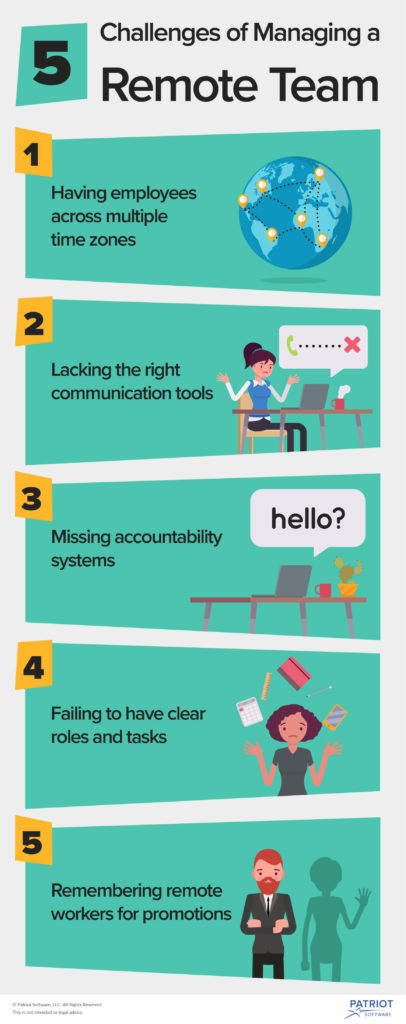
Nearshore engineering partnerships with Latin America typically provide six to eight hours of overlap with US teams depending on location and schedule. For most teams, that window is enough for a standup, a design review, or a pair programming session. It is not enough for all of those things happening reactively without structure.
The teams that get the most from their overlap windows are the ones that treat them as protected time with defined purposes. The standup happens at the same time every day. Technical questions that require real-time discussion are batched and addressed in a dedicated slot. Code review conversations that would benefit from synchronous discussion are flagged before the overlap window so both parties come prepared.
This is not a rigid scheduling requirement. It is a shared agreement about how to use limited synchronous time effectively so that the async hours on both sides are productive rather than blocked on waiting.
For a practical guide to navigating time zone differences when working with nearshore development teams, Blue Coding's post on how to work around time zone differences when outsourcing development covers the operational mechanics in detail.
Onboarding is not just a slower version of normal work. It is a different kind of work with a different goal. The goal of the first two weeks is not to close tickets. It is to build the mental model, the relationships, and the contextual understanding that makes ticket-closing meaningful and efficient afterward.
That means the first two weeks should have a structured schedule that is distinct from a normal sprint. Planned introductions to key team members. Walkthroughs of the codebase rather than first pull requests. Reading time for architecture decision records and product context documents. Pair programming sessions with existing engineers rather than solo implementation tasks. This investment feels slow in week one and two. It produces measurably faster contribution from week three onward. The teams that skip it to get immediate ticket throughput from a new engineer consistently get worse outcomes than the ones that treat the first two weeks as an investment in the relationship, not a delay in delivery.
One of the most consistent remote onboarding best practices across high-performing distributed teams is giving new engineers a small, well-scoped first task that has a clear definition of done and is genuinely useful but not a critical path. The purpose is not the output of the task. It is the process of completing it. A first task forces the new engineer to navigate the real workflow: setting up their environment, running the code locally, making a change, opening a PR, getting feedback, and seeing it merged. Each step in that process surfaces real questions that documentation cannot fully anticipate. The first task is the best diagnostic tool you have for identifying what the engineer still needs to understand before they can operate independently.
Remote teams that work well across time zones are not doing it through goodwill and adaptability. They have explicit norms about how async communication works that every team member understands and follows consistently. What counts as an urgent message that warrants interrupting someone versus what can wait for the next overlap. How much context goes into a Slack message versus a linear ticket. When a PR comment is a blocker that needs to be flagged as such versus a suggestion that can be addressed in the next review cycle. What the expected response window is for different channels and different urgency levels.
These norms do not need to be a formal document. They need to be shared, consistent, and actually followed. Teams that have them run significantly more smoothly across time zones than teams that are relying on each individual to figure out the right communication approach through trial and error.
For a comprehensive look at how high-performing distributed engineering teams are structured and managed, Blue Coding's guide to building resilient distributed engineering teams covers the structural and operational dimensions in detail.
The right tooling for a distributed team is not the most sophisticated tooling. It is the tooling that reduces the number of things that require real-time communication to resolve. Good documentation systems, thorough PR templates, clear ticket writing standards, and asynchronous video tools for walkthroughs and context sharing all reduce the synchronous load on the overlap window.
Teams that are over-reliant on synchronous communication to coordinate work are creating a structural dependency on overlap hours that limits how effectively they can use time outside those windows. The goal is not to eliminate synchronous communication. It is to make the async hours as productive as possible so the synchronous time can be used for the things that genuinely require it.
For a curated look at the project management and collaboration tools that work best for remote engineering teams, Blue Coding's post on the best project management software for remote teams is a useful reference for any team building or refining their distributed workflow.
The most important thing to monitor in the first 90 days of a remote engineering engagement is not ticket throughput. It is an integration quality. Is the new engineer asking questions when they are blocked or staying quiet? Are they participating in planning conversations or staying in listener mode? Do they have a clear understanding of what good looks like for this team? A brief weekly check-in in the first month, distinct from sprint ceremonies and focused specifically on how the engineer is experiencing the onboarding, surfaces issues early enough to address them. Problems that are caught in week three are solved in a conversation. Problems that are discovered in month three require significant rework to fix.
According to SHRM research on talent acquisition, organizations with strong onboarding processes improve new hire productivity by over 70 percent. For remote engineering teams working across time zones, that productivity improvement is not just a nice-to-have. It is the difference between a nearshore engagement that delivers from the first sprint and one that takes months to reach meaningful velocity. The teams that take onboarding seriously get more from their nearshore partnerships, retain engineers longer, and build institutional knowledge that stays with the organization rather than walking out when an engagement ends. That is a compounding advantage that shows up in every quarter that follows a well-executed onboarding.
Blue Coding is a nearshore software development and tech staff augmentation company that connects US engineering teams with senior, English-proficient developers from Latin America. We do not just place engineers and consider the job done. We stay engaged through the early weeks of every engagement to make sure onboarding goes smoothly on both sides.
Our engineers come with the time zone alignment, communication skills, and professional experience to integrate into your team quickly. We help both sides build the structure that makes that integration stick. We offer a free first call with no commitment. A direct conversation about your team structure, your time zone setup, and how to make a nearshore engineering engagement actually work from day one. Book your free call with us now!


Subscribe to our blog and get the latest articles, insights, and industry updates delivered straight to your inbox