CTOs, this one's for you! A no-fluff guide to scaling your engineering team quickly in Q4 without blowing your budget or your deadline.


.svg)
.svg)
Q4 is the worst time to realize your engineering team is too small. Deadlines stack up. Product roadmaps that looked perfectly on track in September suddenly started looking very ambitious. And hiring through traditional channels? That takes 3 to 4 months on average, which is time you simply do not have.
Here is what the data says: by 2026, 87% of companies are expected to face a tech talent shortage severe enough to disrupt operations, according to a Korn Ferry global workforce study. The companies that will come out ahead are not the ones scrambling to post job ads in October. They are the ones that already have a clear strategy to scale their engineering team fast, without burning out their existing staff or blowing up their budget.
This post is for the CTOs, VPs of Engineering, and founders who need to move now and want a practical plan to do it.
Q4 triggers a mass hiring push across the tech industry. Budgets get signed off. Year-end product deadlines kick in. Companies that put off hiring all year suddenly flood the market trying to fill roles before December. The result is predictable. The available talent pool shrinks fast, recruiter fees go up, and the best developers have multiple offers on the table within days of becoming available. If you are entering this market without a plan or a partner, you are already a step behind everyone else.
The traditional recruiting cycle, which includes job posting, candidate sourcing, multiple interview rounds, offer negotiation, notice periods, and onboarding, does not fit inside a Q4 timeline. You need engineers who can contribute in weeks, not months. That means rethinking how you approach hiring altogether, especially for short-to-medium-term scale needs. The good news is there are faster models that work, and companies scaling their engineering teams right now are already using them.
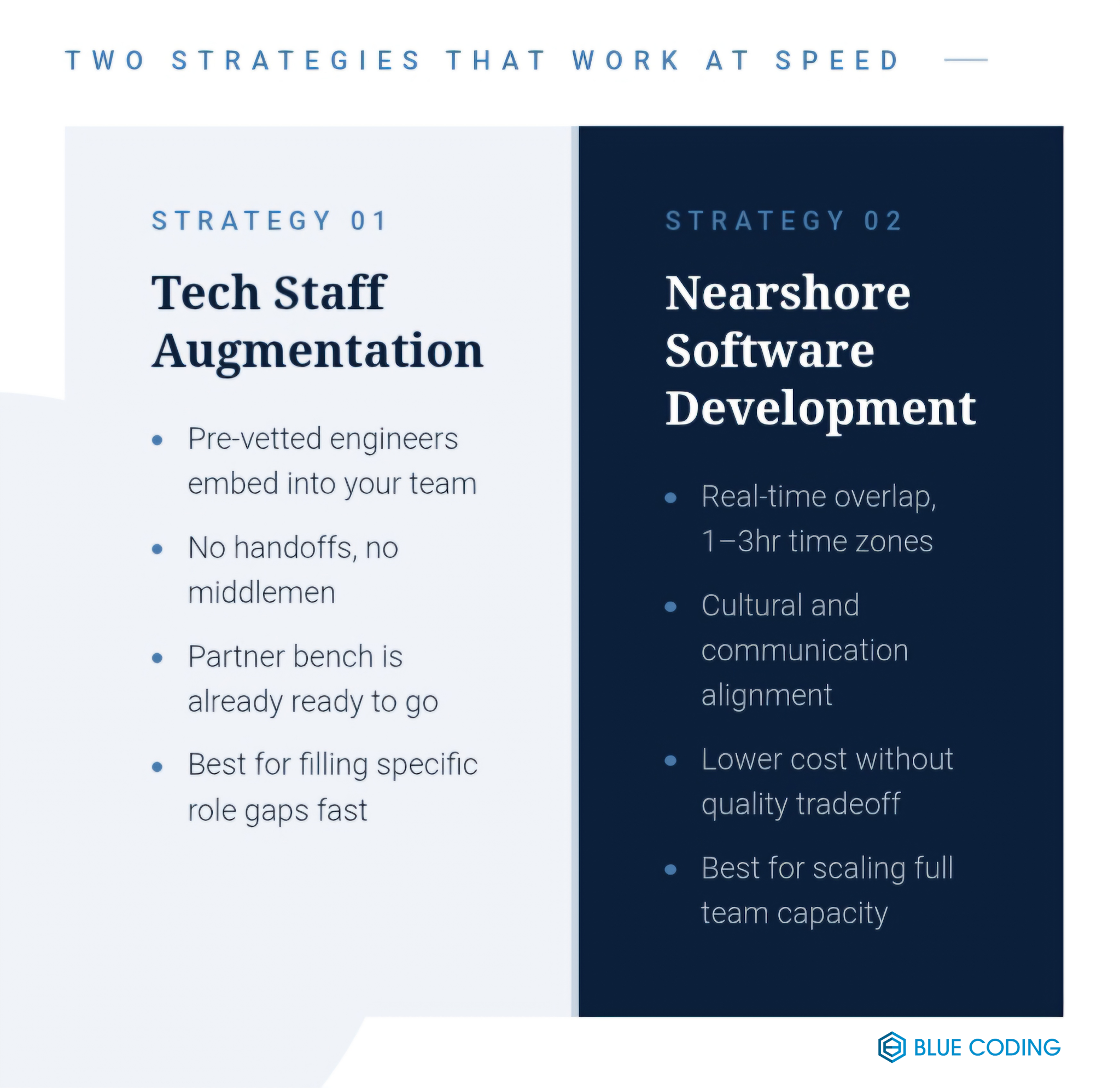
Tech staff augmentation is one of the most effective ways to expand your team without going through a full internal hiring cycle. You bring in pre-vetted, experienced developers who embed directly into your existing team. They work inside your tools, join your standups, follow your processes, and report into your engineering leads just like a full-time hire would. There are no agency middlemen sitting between you and the work. There are no lengthy project handoffs or scopes of work to negotiate. You get engineers who slot in and start contributing right away.
The specific advantage of this model in Q4 is that a good staff augmentation partner already has a bench of available talent. You are not waiting for someone to run a sourcing campaign. You are choosing from developers who are ready now, have already been technically vetted, and have been assessed for communication skills as well, which matters significantly when you are working across different locations and time zones. When you need to hire developers quickly without sacrificing quality, tech staff augmentation is the most direct path. To understand how this fits into your broader hiring strategy, this breakdown of staff augmentation vs managed teams from Blue Coding covers the tradeoffs in detail.
If your need goes beyond adding one or two engineers, and you are looking to build out a full pod or a parallel product team, nearshore software development is worth a serious look. Nearshore means partnering with developers in neighboring or nearby countries that share a time zone range with your core team. For US-based companies, that primarily means Latin America. For European companies, Eastern Europe and parts of North Africa are the common choices.
The advantages over traditional offshore models are practical and significant:
Nearshore software development is not a fallback option for companies that cannot afford local talent. For a growing number of mid-market and Series A to Series C companies, it has become the default model for scaling engineering capacity. This guide from GitHub on building distributed engineering teams goes into how top engineering organizations think about team distribution and collaboration at scale.
Before you bring in anyone new, get clear on exactly what is slowing you down. Is it raw headcount? A specific skill gap, such as no one on the team owns DevOps, QA, or a particular part of the stack? Or is it a process and communication problem that adding more engineers will not actually solve? Companies that scale badly in Q4 are usually the ones that added people to a broken workflow and expected output to improve. Audit your bottlenecks honestly before you start any hiring conversation.
When you are moving fast, onboarding has to be intentional and tight. Before new engineers arrive, document your stack, your deployment process, your coding standards, your current sprint goals, and the context behind key architectural decisions. A developer who joins a well-documented, well-organized team environment can be productive inside their first week. One who joins a chaotic or undocumented setup spends their first month just trying to understand what is going on. This is especially important when you hire developers quickly through augmentation or nearshore software development, since these engineers are often expected to ramp up faster than a traditional new hire.
Whether you go with tech staff augmentation or commit to a nearshore software development partnership, the quality of the relationship matters as much as the talent itself. You want a partner who takes the time to understand your product, your team culture, your technical stack, and your actual delivery timeline, not a vendor who just fills open requisitions.
Ask direct questions before you commit:
A strong partner has clear, confident answers to all of these. You can read more about how Blue Coding approaches the hidden costs of cutting corners on engineering talent and why quality vetting matters.
Speed matters but adding engineers who clash with how your team operates creates friction that slows everything down over time. Even in an accelerated hire, run at least one informal call between the incoming developer and one or two of your existing engineers. Let the team weigh in. That 30-minute conversation can save you weeks of frustration and potential re-hiring down the line.
The realistic timeline to scale your engineering team and see meaningful output before year-end is already tight. If you start the conversation in November, you are most likely looking at January before anyone is truly contributing at full capacity. Start the process now, and you can have engineers embedded, onboarded, and shipping before the holiday slowdown arrives. The companies scaling fastest in Q4 are not doing it by hoping the right candidates show up on LinkedIn. They have partners with ready, pre-vetted talent. They have onboarding processes built for speed. And they have the flexibility to grow and adjust the team as the roadmap evolves.
That gap between companies that consistently hit Q4 targets and companies that keep pushing deliverables into Q1 almost always comes down to one thing: how early they started building the capacity they needed. For a deeper look at what this looks like in practice, Blue Coding's post on scaling from 5 to 50 engineers walks through exactly how fast-growing teams have done it.
Blue Coding is a nearshore software development and tech staff augmentation company that helps US-based businesses build and scale engineering teams across Latin America. We specialize in connecting companies with senior, English-proficient developers who are ready to integrate into your team fast, without the overhead of a traditional hiring cycle or the quality risk that comes with low-cost offshore options. Whether you need one engineer to fill a specific gap or an entire dedicated pod, we will help you figure out the right approach for your timeline, your stack, and your budget. We offer a free first call with no pitch and no pressure. It is simply a straightforward conversation about what you need and whether we are the right fit to help you get there before Q4 closes out. Book your free call now with Blue Coding!


Subscribe to our blog and get the latest articles, insights, and industry updates delivered straight to your inbox