Disengaged teams cost businesses billions every year! Here is what company culture has to do with it and what high-performing teams do differently.


.svg)
.svg)
A lot of companies hang their core values on the wall. They write a mission statement. They talk about culture during the hiring process. And then, somewhere between the first sprint and the quarterly review, culture quietly takes a back seat to deadlines.
That is a mistake, and the numbers show just how costly it is.
According to Gallup's State of the Global Workplace 2025 Report, global employee engagement fell to 21% in 2024. That is the lowest it has been since the COVID-19 pandemic. And the price tag? Around $438 billion in lost productivity worldwide. Not from bad strategy or poor technology. From people who simply stopped caring about the work they were doing.
That is not a small problem to fix with a team lunch or a Slack emoji.
The connection between company culture and productivity is not a soft, feel-good idea. It is one of the most direct levers a business has for getting more done, keeping great people, and actually growing. This post breaks down exactly why that connection matters and what it looks like for remote and distributed tech teams specifically.
Culture is not your ping-pong table or your unlimited PTO policy. Those are perks. Culture is something different. It is how decisions get made when no one is watching. It is whether people feel comfortable raising a concern or whether they stay quiet to avoid friction. It is whether your team believes the work they are doing actually matters.
A simple way to think about it: culture is what happens when the manager leaves the room.
And in a remote or nearshore team setup, that moment happens constantly. No one is watching over anyone's shoulder. People are working from their homes in different cities and sometimes different countries. The only things keeping the team aligned and motivated are the norms, the communication habits, and the sense of shared purpose that the culture has built or failed to build.
When culture is strong, remote teams move fast and stay together. When it is weak, people drift, quality drops, and turnover follows.
You do not have to take our word for it. Here is what the research says.
Companies with strong, healthy cultures see an 18% boost in productivity and in some cases up to an 85% increase in revenue, according to data compiled from Gallup's workplace research. On the flip side, organizations with disengaged teams lose that productivity entirely and then some.
Here are a few more numbers worth paying attention to:
The pattern is hard to ignore. When people feel connected to their team and believe in what they are building, they show up differently. When they do not, the business pays for it.
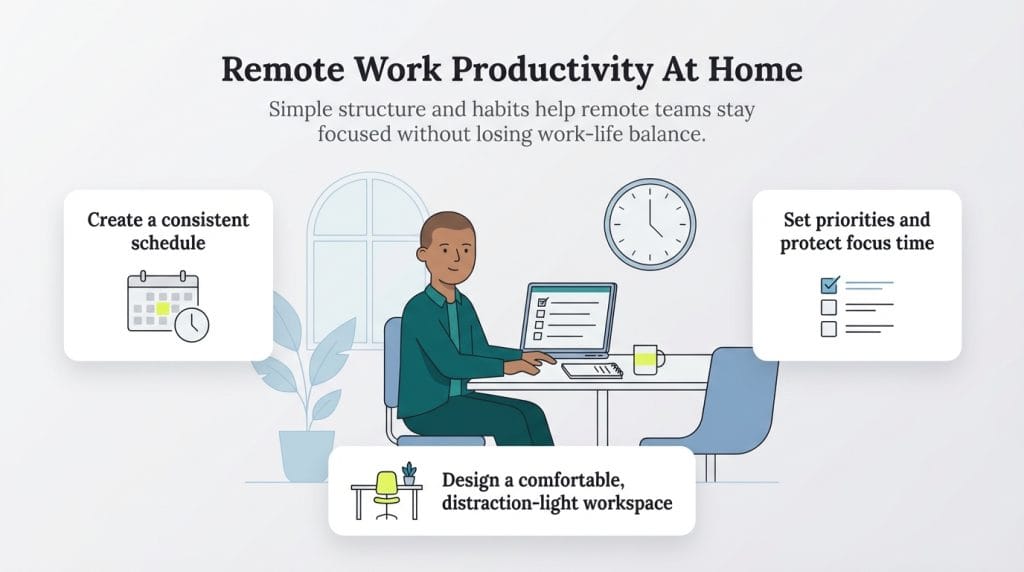
In a traditional office, culture gets built partly by accident. You grab coffee with a teammate. You overhear a conversation. You pick up on how problems get solved just by being in the same room. There is a natural, informal flow of connection that happens whether anyone planned it or not.
Remote teams do not have that. Every touchpoint is deliberate. Every moment of connection has to be created on purpose, or it does not happen at all.
This is not a reason to avoid remote work. Quite the opposite. When companies put real thought into building culture across a distributed team, the results are often better than what happens in a physical office by default. Remote workers actually show higher engagement at 31% than on-site employees when the right engagement practices are in place, according to research by Group Dynamix.
But it requires intention. You cannot set it and forget it.
For companies working with nearshore development teams, this is especially relevant. A nearshore team that feels plugged into your culture, understands your goals, and trusts your processes is a completely different experience from one that just receives tickets and returns code. The time zone alignment that comes with nearshoring helps enormously. Your teams can actually talk, problem-solve in real time, and build the kind of working relationship that sustains culture. But the culture itself still has to be built intentionally.
Teams that consistently ship good work, retain their people, and keep momentum through hard stretches share a few things in common. None of them are complicated. But they are consistent.
High-performing remote teams define how they work together. Which channels are for what, how quickly people should respond, how decisions get documented, and what done actually looks like. They do not leave that to chance.
According to a 2025 report on remote team performance, many remote teams face misalignment not because they lack talent but because of unclear messaging and delayed responses. Clear communication protocols fix that problem at the source.
People need to feel that their work is noticed. This is true in any environment, but it is especially important in remote settings where it is easy to feel invisible. High-performing teams celebrate wins in shared channels, acknowledge contributions in team calls, and make sure people know when something they did made a real difference.
Managers play a huge role here. Research shows that managers account for up to 70% of the variation in employee engagement on a team. That is not a minor factor. The way a manager communicates, gives feedback, and shows up for their team has more impact on culture than almost anything else a company can do.
The best-run remote and nearshore teams build in time for people to connect as people, not just as contributors to a project. That might be a short weekly check-in that is not about tasks. It might be a virtual coffee chat between teammates from different countries. It might simply be a manager who asks how someone's week is going and actually listens.
These things sound small. They are not. Employees who feel their organization genuinely cares about them are 71% less likely to burn out and three times more likely to be highly engaged, according to recent Gallup data.
One of the fastest ways to kill productivity in a tech team is to make the work feel like it has no purpose. When developers and engineers are just closing tickets without understanding what they are building toward or why it matters, motivation eventually runs out.
Teams that consistently perform well make sure every person, including external developers and nearshore teammates, understands what the product is trying to do, why it matters to users, and how their work fits into the bigger picture. That kind of context turns a job into something people actually care about.
One of the concerns companies sometimes raise when thinking about nearshore staff augmentation is whether an external team can really fit into their culture. It is a fair question, and the honest answer is that it depends entirely on how you approach it.
If you treat nearshore developers as a separate group who receive work and return results, you will get a transactional relationship. The culture gap will stay wide. And you will likely end up wondering why the results are just okay.
If you onboard them the same way you onboard anyone else, introduce them to the team, share the mission, include them in the conversations that matter, and treat them like the full team members they are, something different happens. They start to care. They ask better questions. They flag problems early. They contribute ideas you would not have thought of otherwise.
Cultural fit in nearshore augmentation is not about sameness. It is about shared standards, shared communication habits, and a shared sense of what quality looks like. LATAM developers working with US companies already tend to be familiar with agile workflows and the direct communication style US teams expect. The foundation is there. Culture is what you build on top of it.
Sometimes a team does not realize culture has become a problem until people start leaving. Here are a few warning signs worth watching for:
Any of these can show up in an in-house team, a remote team, or a nearshore team. The source is usually the same: culture has not been built with enough intention.
A few things that actually work:
Start with clear values that mean something. Saying you value excellence means nothing on its own. Values that guide real behavior are ones that describe how your team actually makes decisions, treats each other, and handles hard situations. Those are the values worth writing down and returning to.
Make onboarding a cultural introduction, not just a task list. The first two weeks tell a new team member everything about what kind of company you actually are. Use them well. Share the mission, introduce them to the people, and let them see how the team really operates.
Check in on the health of the culture, not just the health of the project. A regular team retrospective that includes space for people to talk about how the collaboration is feeling, not just what was built, catches problems early before they become expensive ones.
Invest in your managers. They are where culture either gets reinforced or quietly falls apart. Training managers in remote leadership, feedback delivery, and genuine listening is one of the highest-return investments a company can make.
If you are working with a nearshore or distributed team and want to go deeper on integration, this guide on integrating nearshore staff augmentation into your business is worth reading before you start your next hire.
Every piece of software your team ships, every feature that works, every deadline that gets met are the result of people working together well. And people work together well when they trust each other, feel like their work matters, and have the environment they need to do it.
That is culture. And building it is not optional.
The companies that treat culture as something worth investing in, and that do the work to maintain it across remote and nearshore teams, consistently outperform the ones that treat it as a nice-to-have. The research is clear on this. So is the experience of anyone who has worked on both kinds of teams.
Company culture and productivity are not separate conversations. They are the same one.
At Blue Coding, we do not just match you with developers. We take the time to understand your team, your communication style, and the kind of culture you have built before we make a single introduction. Every developer we place is vetted not just for technical skill but for how they communicate, how they collaborate, and how they fit into the kind of team you are trying to grow.
Whether you need one engineer to fill a specific gap or a full nearshore team working alongside your existing people, we make sure the transition feels like a natural extension of your team and not a disruption to it.
Schedule a free first call with our team and let us talk about what you are building and how we can help you build it with the right people.


Subscribe to our blog and get the latest articles, insights, and industry updates delivered straight to your inbox