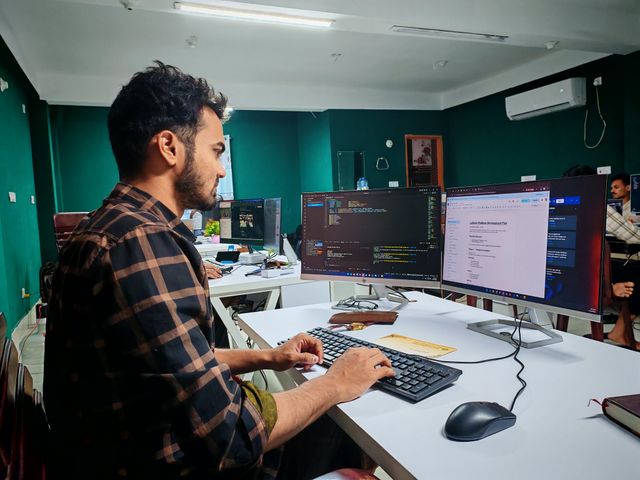
AI tool users complete tasks 55% faster. Here is why US teams are hiring AI-fluent nearshore developers instead of waiting on retraining programs.

.svg)
.svg)
The AI tooling conversation in software development has moved past the question of whether to adopt it. Most engineering leaders have accepted that AI-assisted development is becoming standard practice. The real question now is where the AI-fluent engineers are going to come from. Two paths exist. You retrain your existing team. Or you bring in engineers who already have the skills you need.
Both sound reasonable on paper. In practice, they perform very differently, and the gap between them is widening fast. This post explains why a growing number of US engineering teams are choosing to hire AI-fluent nearshore developers from Latin America rather than running internal upskilling programs, and why that choice is producing better results for the companies making it. According to GitHub's 2024 State of the Octoverse report, developers using AI coding tools are completing tasks up to 55 percent faster than those who are not. That productivity gap does not close while your team sits through a retraining program. It widens every sprint.
The appeal of retraining is intuitive. You already have engineers who know your codebase, your architecture, and your team culture. Teaching them new tooling seems more efficient than onboarding someone new. The problem is the timeline. Meaningful AI proficiency in a professional engineering context is not a two-week course. It is a capability that develops through sustained practice, real-world feedback loops, and exposure to how AI tools behave across different technical contexts. Engineers who are already carrying a full sprint workload do not have the bandwidth to develop that proficiency at the pace that the business needs.
What happens in practice is that upskilling gets treated as a parallel track alongside normal delivery responsibilities. Engineers attend sessions, complete modules, and technically progress through a curriculum. But because the practice is not embedded in their daily work in a meaningful way, the skill development is slow and the transfer to actual delivery output is inconsistent.
By the time your existing team has meaningfully upskilled, six to nine months have passed and the AI tooling landscape has moved again.
Every sprint your existing engineers spend partially focused on learning is a sprint where their core delivery contribution is reduced. This cost is almost never calculated explicitly. It gets absorbed into velocity metrics as a gradual slowdown rather than a visible line item.
When engineering leaders do the honest math, the true cost of an internal upskilling program includes not just the training infrastructure but the reduced output across the entire team during the learning period. For most companies, that cost is larger than a nearshore hiring engagement that adds AI-fluent capacity immediately.
This does not mean retraining is never the right answer. For some engineers on some teams, investing in upskilling makes sense and pays off. The question is whether it should be your primary strategy for building AI capability into your engineering output, or whether bringing in engineers who already have that capability is the faster and more reliable path.
The narrative about Latin American engineering talent has evolved significantly over the past several years. The engineers who have built careers working with US product teams are, in many cases, ahead of their US counterparts on practical AI tooling adoption.
The reason is structural. LATAM developers targeting US companies compete in a global market for engineering roles. That competitive pressure creates a strong incentive to stay current with the tools that make them more valuable to US engineering teams. AI coding assistants, AI-assisted testing, prompt engineering for development workflows, and the security practices around AI tool usage are not novel concepts for this talent pool. They are professional differentiators that engineers have been actively developing.
The result is a large and growing pool of AI-fluent nearshore developers from Latin America who have real-world experience integrating these tools into production engineering workflows, not just familiarity with them from a course.
One of the reasons nearshore AI developers in Latin America are particularly effective for US teams is the combination of AI fluency and time zone alignment. An AI-fluent engineer who operates asynchronously with your team still creates delays at the review and iteration layer that slow the overall benefit down. An AI-fluent engineer who is online during your working hours, in your standups, and available for real-time collaboration removes that friction entirely.
Latin America sits within zero to three hours of US time zones. That synchronicity means the productivity gains from AI-assisted development compound directly into your team's sprint output rather than being partially offset by communication overhead.
For a closer look at why time zone alignment is one of the most underestimated advantages of nearshore development, Blue Coding's post on how time zone affinity boosts productivity in tech nearshore projects covers the operational impact in detail.
AI-assisted development is deeply communication-dependent. Writing effective prompts, documenting AI-generated code decisions, explaining tradeoffs to non-technical stakeholders, and contributing to code review conversations about AI-generated output all require strong English communication skills. This is one of the reasons the quality of English proficiency matters so much when hiring AI-fluent nearshore developers, not just technical skill. A developer who can implement AI tooling effectively but cannot communicate the decisions behind it clearly creates a knowledge gap in the team that grows over time.
The best nearshore AI developers from Latin America combine genuine AI fluency with the professional English communication skills that make that fluency actually useful inside a US engineering team. When you are evaluating candidates through a nearshore partner, both dimensions should be assessed explicitly rather than assumed.
When engineering leaders talk about wanting AI-fluent developers, what they actually need is more specific than familiarity with generative AI tools. Production-level AI fluency means knowing how to integrate AI coding assistants into a professional workflow without introducing security risks, code quality issues, or architectural problems.
It means having a clear mental model for when AI-generated output is trustworthy and when it needs deeper review. It means understanding how to configure AI tools so they do not send proprietary code to third-party servers without appropriate safeguards. It means being able to use AI to genuinely accelerate delivery, not just produce more code faster, which are not the same thing.
The developers who have this kind of practical AI fluency are different from the ones who have completed AI courses or experimented with tools personally. They have shipped production software using these tools, dealt with the failure modes, and developed the judgment that comes from real-world experience.
When you are evaluating candidates through a nearshore partner for AI-fluent roles, the assessment should go beyond technical interview questions about AI concepts. You want to understand how a developer has actually used these tools in their recent work.
Ask them to walk you through a specific example of using an AI coding assistant on a production task. Ask what the tool got wrong and how they caught it. Ask how they handle proprietary code considerations when using cloud-based AI tools. Ask what they think AI tools are genuinely not good at yet.
The answers will tell you more about real AI fluency than any certification or resume line ever will. A developer who can answer those questions with specific, nuanced examples has the kind of practical fluency that translates into actual team productivity. One who gives generic answers about AI being useful for productivity is probably earlier in the learning curve than the role requires.
For a broader look at how AI is reshaping what engineering teams need from the developers they hire, Blue Coding's post on why AI-augmented development teams outperform traditional software teams covers the structural shift in detail.
The most effective approach for most US engineering teams is not a binary choice between retraining existing staff and hiring AI-fluent nearshore developers. It is a combination of both, used deliberately.
Upskilling your existing engineers makes sense as a long-term investment in team capability. The engineers who know your product deeply and carry your institutional knowledge will become more valuable as their AI fluency grows, and that investment pays off over time.
But using internal upskilling as the primary strategy for building AI capability into your immediate delivery output is a slow path in a moment that rewards speed. Adding AI-fluent nearshore developers alongside your existing team creates an accelerator effect that benefits both tracks. Your existing engineers see AI tooling being used effectively in production, learn from working alongside developers who already have that fluency, and develop their own capabilities faster through real-world exposure. Meanwhile, your delivery output improves from day one rather than six months from now.
The companies building AI-fluent engineering teams right now are developing a delivery speed advantage that is going to be difficult for slower-moving competitors to close. That advantage is not primarily about having access to the tools. Everyone has access to the same tools. It is about having engineers who know how to use them effectively integrated into your team while others are still working through training programs.
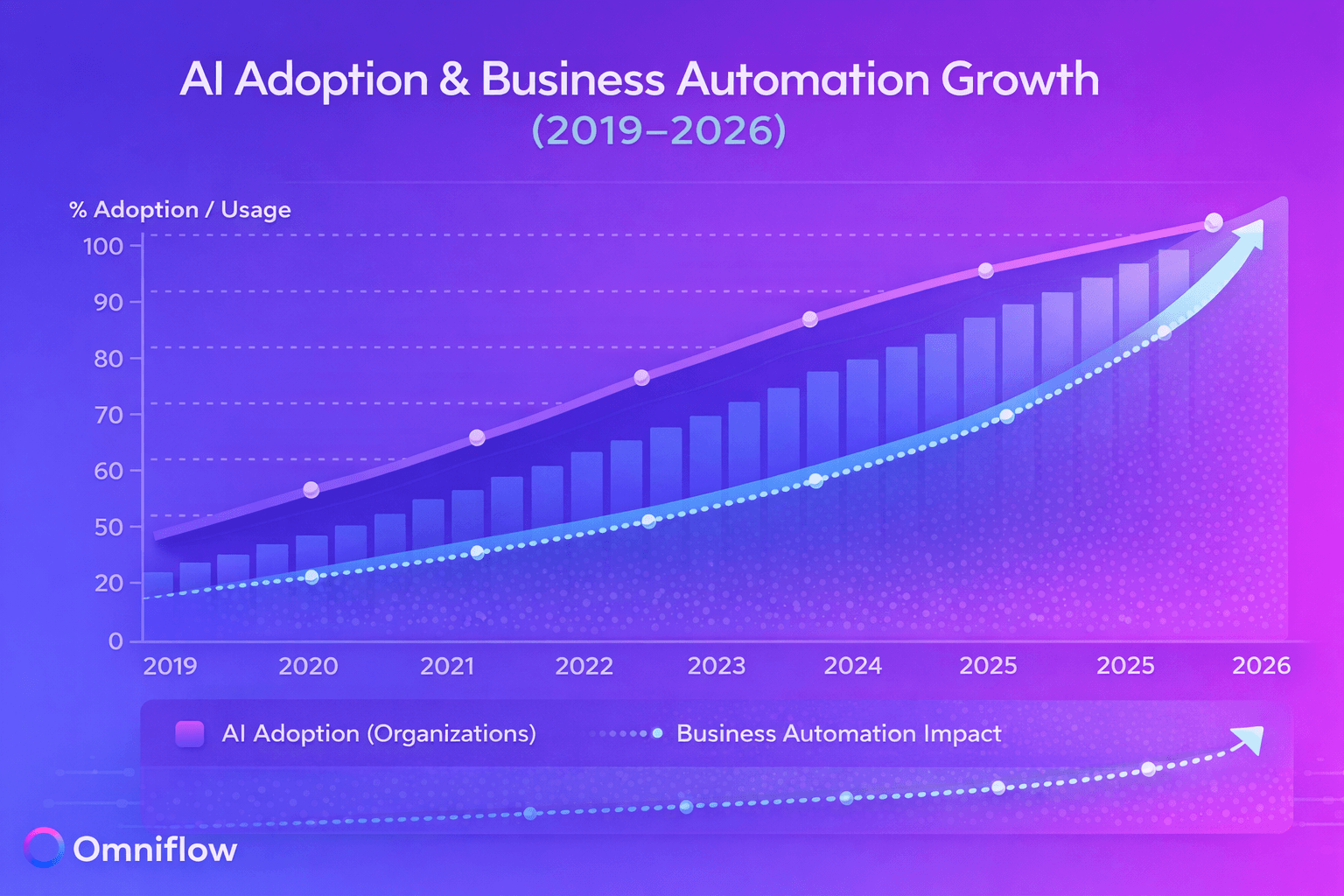
According to the World Economic Forum's Future of Jobs report, AI and machine learning specialists are among the fastest-growing roles globally, while AI fluency is becoming a baseline expectation across technical roles. The gap between teams that have built this capability and teams that are still building it is widening, not narrowing.
The companies that move fastest on this are not the ones spending the next six months running internal upskilling programs. They are the ones adding AI-fluent capacity to their teams now while also investing in the longer-term development of their existing engineers.
For companies thinking about how to structure an engineering team that can actually take advantage of this shift, Blue Coding's post on transitioning your engineering team to AI-first development covers the operational and cultural dimensions of making that transition work.
Blue Coding connects US engineering teams with senior, AI-fluent nearshore developers from Latin America who have real production experience with AI tooling, strong English communication, and the time zone alignment to integrate into your team without friction. We vet for practical AI fluency, not just familiarity. Our engineers have used these tools in production environments, understand the risks, and can contribute to your team's AI-assisted delivery output from week one.
If you are trying to build AI capability into your engineering team faster than an internal upskilling program allows, we are ready to show you what that looks like in practice. We offer a free first call with no commitment. A direct conversation about where your team is, where you want it to be, and whether the right nearshore AI engineers can help you close that gap faster than you expected. Book your free call with Blue Coding now!


Subscribe to our blog and get the latest articles, insights, and industry updates delivered straight to your inbox